
Cumberland County 72-Hour Window
The Cumberland County Sheriff's Office maintains a distinct official 72-hour jail view. It covers rolling intake and release activity rather than three fixed calendar dates. As time passes, the oldest events drop away. This longer span is the correct second stop after a release is no longer visible in the one-day view, but it is still temporary.
The public heading can mislead a quick reader because the page includes current people who were recently booked as well as people who departed. The record must show a Release Date. A blank date means the card does not yet document release from the Cumberland County Jail, even if it appears in the wider window. The sheriff says the roster updates each hour, while the portal gives no tighter promise about transaction timing.
The captured Cumberland County 72-hour portal displays this broader official window.
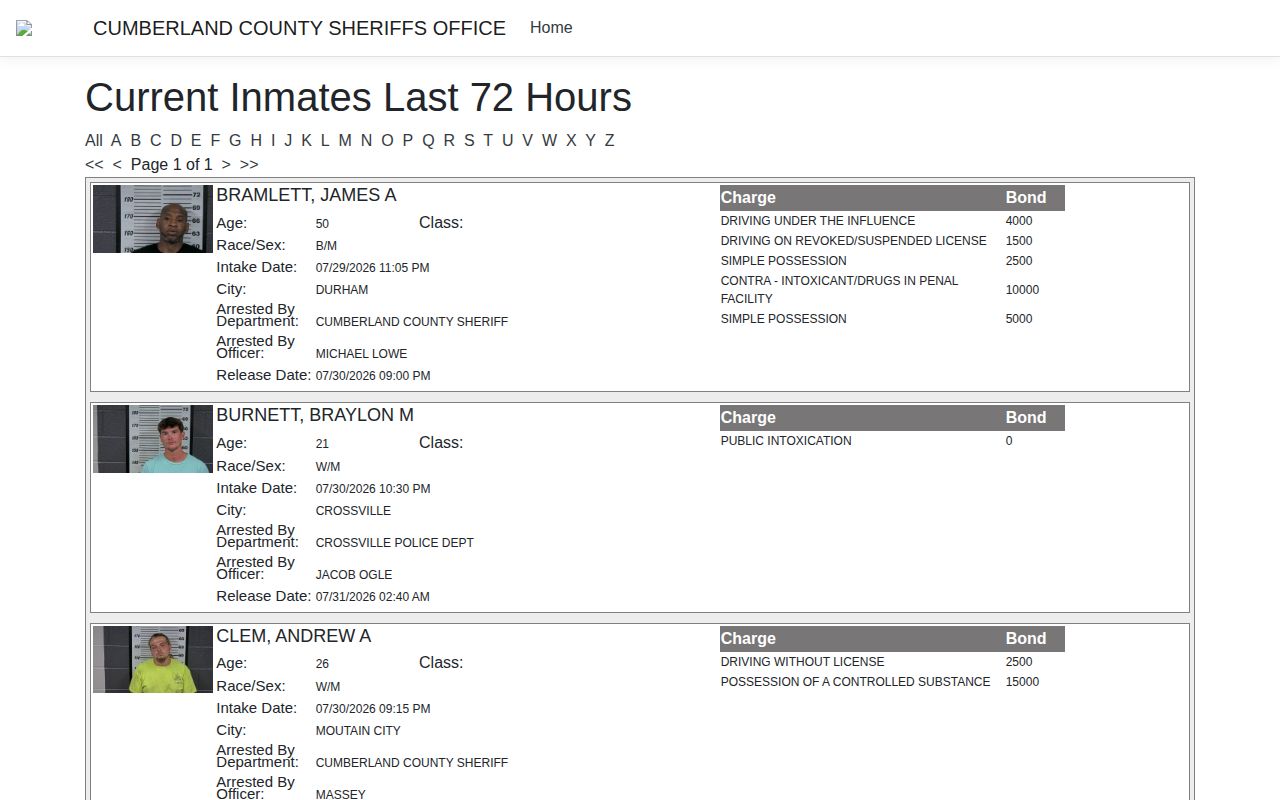
The live version changes continuously, so use the current timestamp and fields rather than relying on an old capture.
Review Cumberland Three-Day Releases
A three-day review works best when the searcher has a likely name and a rough event range. The wider view may return more cards and more same-name risk than the short feed. Compare enough public details to avoid joining facts from separate people.
- Open the official 72-hour URL and check that the heading identifies the longer window.
- Locate the likely name and compare age, city, intake timestamp, charge, and arresting agency.
- Look for a filled Release Date. Exclude a card whose release line remains blank.
- Read intake and release times together and record the access time because the list rolls forward.
- If the event is very recent, compare the Cumberland County 24-Hour Releases view.
- If the card is older or missing, move to Released name search and then the custodian's record.
The card shows an actual county departure time when the field is filled, but it may not state why the person left. It also does not identify every destination in a visible release-reason field. Use a CCSO release sheet, court order, bond paper, or receiving-agency record when the legal or custodial result matters.
Note: Save the exact portal URL and access time instead of storing more personal data than the verification requires.
Cumberland 72-Hour Release Fields
The 72-hour interface uses the same county card design as the one-day feed. That consistency helps compare views, but it does not convert a blank field into a release. Each field has a limited role.
| Displayed field | How to read it |
|---|---|
| Photo and name | Identity clues tied to the booking card, not proof of departure or guilt. |
| Age, class, race/sex, city | Descriptors that can help distinguish similar names. |
| Intake timestamp | The start shown for the Cumberland County booking event. |
| Arresting department and officer | The local agency information attached to the intake. |
| Release Date | The date and time of departure from CCSO custody when populated. |
| Charge and bond | Booking-related case data that does not itself state the release reason. |
Do not infer that a displayed bond caused the release. The visible portal does not label release reason. A bond, recognizance, dismissal, time served, court order, local sentence completion, probation after split confinement, or transfer can all produce different records. The actual agency or court document is the place to resolve that question.
Cumberland Weekend Release Review
The three-day span is especially practical after a weekend or holiday because it reduces the need to guess one exact day. It can catch a Friday event viewed on Sunday, or another departure that has already rolled out of the newest-day view. This is a benefit of the longer window, not a promise about Cumberland County Jail's release schedule.
No official source found in the Cumberland research states a standard release hour, weekend routine, holiday procedure, public waiting point, or pickup door. Those facts should not be inferred from a card timestamp. Processing may also precede the public update. If a release is expected but absent, wait for the next hourly roster cycle when practical, call the jail, and use the official record path. A court order can explain the authority for release, but the sheriff's record remains the best source for actual gate time.
Was the person released over the weekend? A populated timestamp within the rolling 72-hour view supports that Cumberland County departure. Confirm the destination before treating it as a community return.
Note: The 72-hour view broadens the time span, but it does not become an archive or a released-only list.
Cumberland Release Search Beyond 72 Hours
Cumberland's portal has an unusual three-part path: use the one-day activity page, expand to the three-day activity page, then use the Released checkbox name search. The third route has First Name and Last Name fields but no displayed date range. CCSO publishes no retention or lookback promise for it.
Enter the best known name, select Released, and verify any match against intake, city, charge, agency, and other available facts. Try a careful spelling variant or last name alone when appropriate. An empty query does not independently prove that no release or booking took place. A name variant, an expunged event, confidential status, retention, or system change can all affect what appears.
The captured Cumberland released-person search shows the form used after a card leaves the rolling pages.
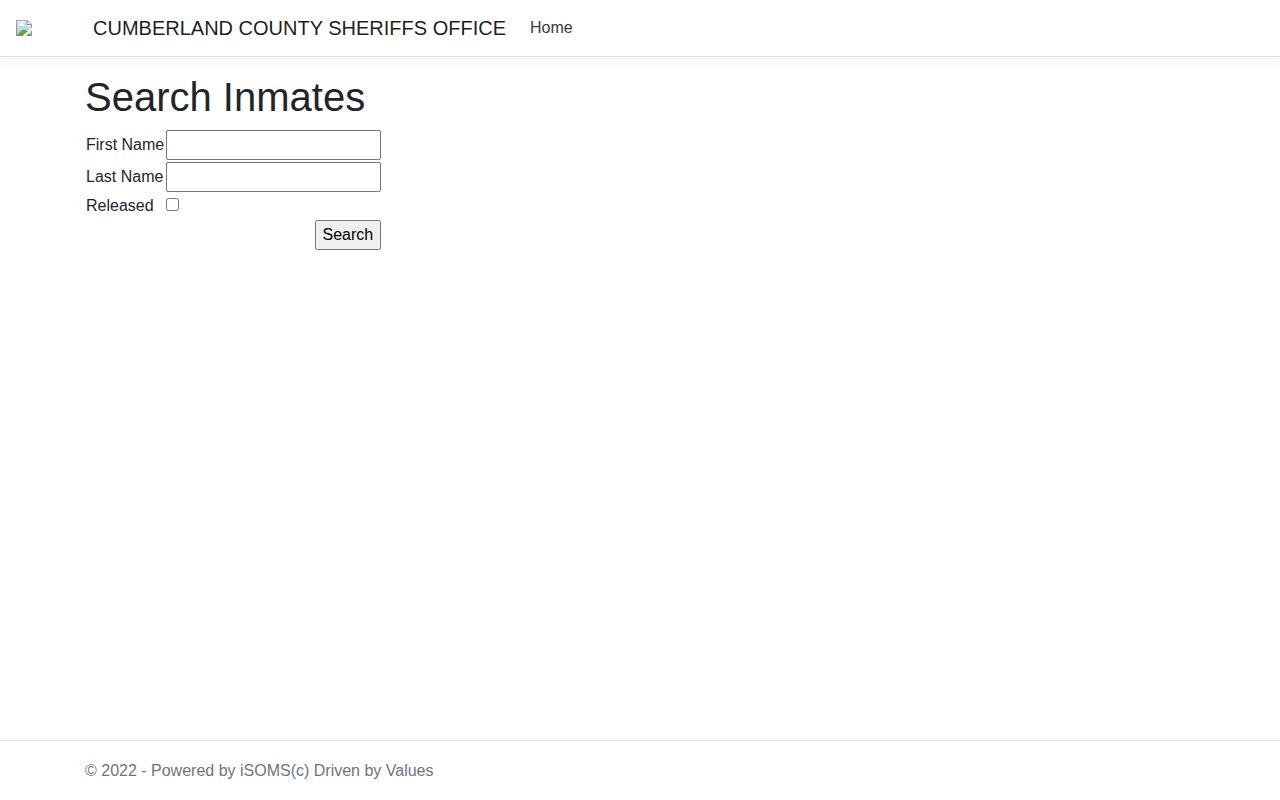
The checkbox must be selected to distinguish the older released-record query from a current-custody search.
Cumberland Release Versus Transfer
Leaving the Cumberland County Jail does not always mean returning to the community. A person may post bond, receive a court release, finish time served, or complete a local sentence. The same departure can instead be a move to TDOC, another county, USMS, ICE, or an agency holding a detainer. “Release” and “transfer” must stay separate.
| Result | Next source |
|---|---|
| County community release | CCSO release record plus the court disposition or bond order. |
| TDOC commitment | FOIL and the TDOC record, with VINE used for the custody transition. |
| Other-agency transfer | The released-to field, VINE, receiving custodian, or court file. |
| Federal or immigration path | Federal docket or USMS, BOP when sentenced custody exists, or ICE when facts point there. |
FOIL status needs the same care. Incarcerated means state custody continues. Parole or probation means physical release with active TDOC supervision. Inactive means no active TDOC custody or supervision, subject to the database's limits. A future eligibility or expiration date is not an actual event.
For a person-specific workflow across all custodians, the Cumberland County release lookup explains how county records, courts, TDOC, VINE, and federal sources fit together.
Note: Match an agency departure to a receiving record or durable legal record when the destination is unclear.
Cumberland 72-Hour Record Fallback
Call the Cumberland County Sheriff's Office at 931-484-6176 or visit 90 Justice Center Drive, Crossville, when the three-day feed and Released name search do not settle the question. Sheriff Casey Cox's office can route a request for the county jail record. Ask for the releasable booking and release record tied to a name, known identifier, and approximate intake date. Request intake and actual release time, release type or authority, released-to or transfer category if public, booking number, and charge or bond fields. Accept redactions.
Use the county public-records form when a stable copy is needed. Inspection of open records is ordinarily free. Standard copy guidance lists page rates and labor after the first hour, but an estimate should come from the office rather than be guessed. For a TDOC transfer, use FOIL first and TDOC Records Management for release authorization or discharge proof. VINE is useful for a custody-change alert, while the Cumberland court portal supplies the judgment or later order.
The request should identify one booking with a full name, known identifier, and approximate intake date. Ask for the actual release time, release type or authority, released-to category if public, and the related booking number. A narrow request is more useful than asking the sheriff to compile conclusions that the office does not keep. When a court order is also needed, identify the clerk for the court named in the case. The court can document the legal disposition, while CCSO documents the physical departure from the jail.
For state custody, request the TDOC release authorization or discharge record rather than treating a future eligibility field as an event. Cumberland County has no state prison, and a person committed from the local jail may be classified elsewhere in Tennessee. Bledsoe County Correctional Complex and Debra K. Johnson Rehabilitation Center are diagnostic intake routes for men and women respectively, not guaranteed placements for a Cumberland case.
- Rolling view
- A short public window that changes as events age.
- Released search
- The county name query with Released selected and an unpublished retention span.
- Durable record
- An agency or court document retained beyond the public feed.